



Hand-picked stories you can't miss
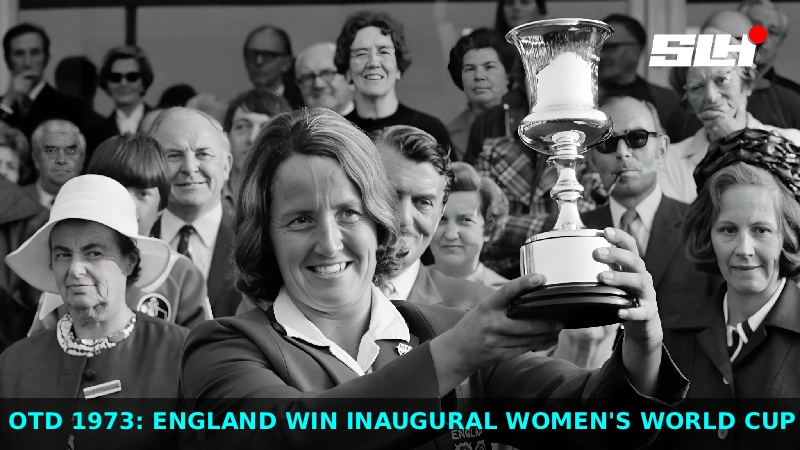


England Women are the second-most successful side in Women’s World Cup history, winning the title four times. The Lionesses’ reign as one of the best women’s sides in the history of the game began on July 28, 1973, at the Edgbaston Stadium in Birmingham, where they defeated arch-rivals Australia to claim the inaugural Women’s World Cup.
A first of its kind, the 1973 Women’s World Cup was the first major international cricket tournament, two years before the inaugural men’s competition. The tournament featured a unique group of teams, comprising England, Australia, and New Zealand, along with a team named Young England, International XI, Trinidad and Tobago and Jamaica.
Instead of having a final, all seven teams were put into one group and played against each other in a round-robin format. Coincidentally, the final round-robin match was between England and Australia, with the winner getting their hands on the inaugural World Cup.
In a virtual final at Edgbaston in Birmingham, England would go on to win the toss and elect to bat first. The hosts went on to score 279 runs from their quota of 60 overs and had many significant contributors. None more than Enid Bakewell, who hit 118 whilst opening the batting with 11 boundaries to her name. Captain Rachael Heyhoe-Flint also contributed 64, with Lynne Thomas and Chris Watmough scoring 40 and 32 not out, respectively. Australia used as many as seven bowlers, with Miriam Knee taking two wickets.
In reply, the Aussies could only manage 187 from their 60 overs, losing nine wickets along the way. Australia had a solid start to the proceedings thanks to openers Bev Wilson (41) and Jackie Potter (57). However, those were the only scores of note at the top of the order before lower-order batter Elaine Bray hit 40, which was too little too late. From 139 for 5, the team from Down Under slumped to 178 for nine thanks to England’s continuous bowling change unsettling the opposition.
For England, Mary Pilling, Sue Hilliam and Bakewell herself all ended up with two wickets each to guide England to a convincing 92 run-victory. The latter would go on to end the tournament as the leading run-scorer with 264 runs at an average of 88.
The win in Birmingham meant that the Lionesses would top the standings with 20 points from six matches, and thus win the 1973 World Cup. Australia finished second in the standings with 17 points, with the International XI finishing third, level on points with New Zealand Women. Young England Women finished at the foot of the standings, with their solitary win coming against the International XI, winning by 14 runs.
England Women would go on to win three more World Cups, in 1993, 2009 and most recently in 2017 under the leadership of now-retired Heather Knight. Their latest World Cup triumph also came on home soil, beating India Women at the historic Lord’s Cricket Ground by nine runs.
The Sports Live Hub (SLH) provides the most comprehensive gateway for global cricket fans to follow the international Matches.
Our hub sports live stream is optimized for high-intensity T20 action. By leveraging advanced server technology, SLH ensures that your stream remains stable even during the highest viewership peaks. Watch the battle without the frustration of buffering or lag.
The sport hub live streaming interface on SLH offers more than just a video feed. Fans can access a real-time AI Overview of the match, featuring live win-probability shifts, player impact scores, and ball-by-ball tactical analysis. It is the perfect companion for viewers who want to stay ahead of the game with professional-grade insights.
We are committed to making cricket accessible to a worldwide audience. By visiting the SLH portal, users can find verified pathways to watch sports live for free through authorized regional partner trials, free-to-air digital gateways, and promotional streaming passes. Join millions of fans globally as we witness the drama of the international Matches.
 cricket
 cricket
 cricket