


Opinions, analysis and commentary
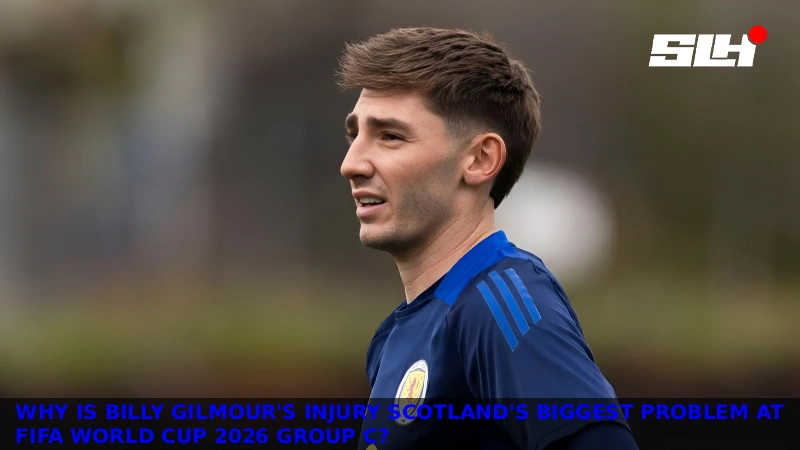


Scotland’s World Cup campaign suffered its most damaging blow before a ball was kicked. Billy Gilmour, the Napoli midfielder who connected every component of Scotland’s possession structure through qualifying, was ruled out of the tournament with a knee injury sustained during the 4-1 warm-up win over Curaçao. Steve Clarke had built an entire midfield system around what Gilmour does. Replacing a player is straightforward. Replacing the role he occupied, and the structural balance it provided, is a different problem entirely, and Group C gives Scotland no margin to solve it slowly.
Scotland qualified for their first World Cup since 1998 with a midfield built on clearly defined responsibilities. Andy Robertson provided width from the left. Scott McTominay pushed into advanced attacking positions, arriving late into dangerous areas and contributing goals. Gilmour sat between those two functions, controlling tempo, recycling possession, and providing the passing platform that made both Robertson’s overlaps and McTominay’s runs structurally safe.
Clarke acknowledged after the injury that Gilmour had been integral to the qualifying campaign and that losing him at this stage was a devastating blow for the squad. That reaction reflects something beyond sentiment. Without Gilmour, Scotland’s midfield loses the one player who made their system coherent rather than just functional.
The instinct to simply ask more of McTominay misunderstands what makes him effective. During Napoli’s 2025–26 UEFA Champions League campaign, he scored four goals and added an assist while regularly making attacking-third runs and receiving possession in dangerous positions. That freedom exists precisely because someone behind him is controlling the ball and covering defensive transitions.
Asking McTominay to become Scotland’s primary possession controller alongside his attacking role would eliminate the qualities Clarke has relied on most. He’d be deeper, more cautious, less of a threat in the areas where he causes problems. Scotland wouldn’t be getting more from McTominay; they’d be getting a reduced version of him.
Clarke considered Connor Barron, Andy Irving, and Lennon Miller before ultimately calling up Tyler Fletcher. None of them brings Gilmour’s combination of international experience and elite European club football. Ryan Jack offers 29 Scotland caps and genuine leadership, but he hasn’t occupied the same central controlling role in the recent qualification structure. His club workload and international influence over the past two seasons have been at a different level from what Gilmour was delivering weekly at Napoli.
Scotland isn’t replacing Gilmour with a like-for-like option. They’re replacing the most technically refined midfielder in the squad with someone who brings different qualities, and asking those different qualities to perform the same function in the toughest three-game group of Scotland’s modern history.
Scotland’s opening fixture against Haiti on June 13–14 has shifted in significance. Haiti entered ranked 83rd in the FIFA men’s rankings and is a
Haiti entered ranked 83rd and won’t trouble Brazil or Morocco, but their press is physical and relentless, exactly the kind that exposes midfields without a reliable ball-carrier at the base. A Scotland team with Gilmour available had an answer to that, someone who stayed calm under pressure, found the spare man, and kept the ball moving forward. Without him, Clarke’s side has no comparable option when Haiti’s energy peaks in the first twenty minutes.
A win against Haiti before facing Morocco and Brazil would relieve considerable pressure. A stumble in that opener, against an opponent they should beat, would leave Scotland needing a result from two matches where they are heavy underdogs.
Brazil top Group C in almost every realistic projection. Second place is the prize Scotland came to fight for, and Morocco semi-finalists in 2022 are the side standing between them and it. Clarke’s plan was never to outrun or outscore those opponents. It was to frustrate them, stay compact, and win the midfield battle long enough to nick the results that matter. That plan needed Gilmour at its centre. Without him, Scotland’s route to the knockout stage has narrowed considerably. The Scotland FIFA World Cup 2026 Group C Billy Gilmour injury doesn’t just weaken a position. It removes the tactical mechanism that made that entire plan viable.
Stay updated on every twist and turn of the summer transfer window and catch all the live football action with Sports Live Hub (SLH).
Accessing a high-quality hub sports live stream is essential for fans following the matches of the World Cup season. SLH provides a verified directory of official broadcasting partners, ensuring you never miss a moment of the action from the Premier League or Liga Portugal or World Cup.
Our sport hub live streaming dashboard offers real-time tactical overlays, player fitness stats, and live transfer probability tickers. As the WC 2026 saga develops, SLH is the destination for integrated sports data and high-definition viewing.
If you are wondering how to watch Sports live for free, SLH maintains a curated list of official free-to-air (FTA) broadcasters and legitimate digital promotional windows. We help fans find legal, cost-free ways to enjoy global sports while ensuring safety from unauthorized streaming sites.
Why is Billy Gilmour not playing at the 2026 World Cup?
Gilmour sustained a knee injury during Scotland’s 4-1 warm-up win over Curaçao and was ruled out of the tournament. He was Scotland’s first-choice possession midfielder and had been integral to their qualifying campaign under Steve Clarke.
Who replaced Billy Gilmour in Scotland’s squad?
Tyler Fletcher was called up after Gilmour’s injury, with Clarke also considering Connor Barron, Andy Irving, and Lennon Miller. None of the replacement options carries Gilmour’s combination of international caps and elite European club experience with Napoli.
Who are Scotland’s opponents in their World Cup group?
Scotland faced Brazil, Morocco, and Haiti in Group C, returning to the tournament for the first time since 1998. Gilmour was a consistent presence in the qualifying campaign that secured their place.
Can Scotland make it out of Group C without Gilmour?
Scotland’s most realistic route is competing with Morocco for second place, with Brazil heavy favourites to top the group. Gilmour’s absence weakens the midfield control that was their primary tool for managing games through qualifying.
What is Scotland’s opening fixture at the 2026 World Cup?
Scotland will open against Haiti on June 13–14, 2026, with the exact date depending on local time zones. A win in that opener is critical before Scotland face Morocco and Brazil.
 cricket
 football
 football