


Opinions, analysis and commentary
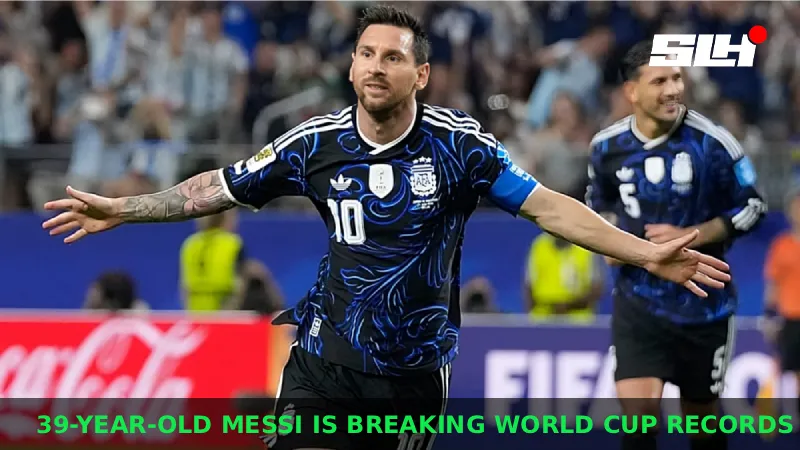


The short answer is that Messi has stopped spending energy on running and started spending it entirely on decisions. He ranks dead last among outfield players in distance covered per ninety minutes at this World Cup, yet he leads the tournament in goals and owns the all-time knockout stage assist record. Argentina’s system now protects him so completely that his legs barely register on a tracker while his output keeps setting records nobody else in the competition is close to touching.
Argentina’s 2-1 comeback win over England in Atlanta swallowed every headline out of the semi-final, from Lautaro Martinez’s stoppage time header to the old rivalry simmering underneath it. Buried inside that noise was what Messi actually produced. He created both goals, won twelve duels, his highest tally in a non-extra-time World Cup match since 2014, and completed nine dribbles, the most of any player in a single game this tournament.
Those weren’t the touches of a player managing his age. They were the best individual creative performance he has produced across the whole competition, delivered in the match that mattered most.
Through the semi-final, Messi has scored eight goals and set up four more this tournament. His career World Cup figures now stand at 21 goals and 12 assists across 31 matches, the most goal contributions by anyone in the last sixty years of the competition.
The sharpest individual number sits in the knockout rounds specifically, where he now holds 10 assists, six clear of anyone else on record since 1966. Pele and Antoine Griezmann trail next with four apiece. Messi has now scored or assisted in eleven consecutive World Cup matches spanning the 2022 and 2026 editions, a run no defense at this tournament has managed to interrupt.
| Tournament | Age | Goals | Assists | Avg Distance per Match |
| 2014 Brazil | 26 | 4 | 1 | 9-10 km est. |
| 2018 Russia | 30 | 1 | 2 | 9-10 km est. |
| 2022 Qatar | 35 | 7 | 3 | 8-9 km est. |
| 2026 USA | 39 | 8 | 4 | 8.2 km confirmed |
Official tracking data through the quarter-finals has Messi covering 35.87 kilometres total across five matches, an average of 6.88 km per game. Of that figure, 4.41 km per match came at walking pace, the highest proportion of low intensity movement of any outfield player left in the draw.
He sits 618th of 618 outfield players in distance per ninety minutes at 8.1 km, compared with Harry Kane’s 53 km covered at 6.52 km/h. Messi’s average speed reads 4.57 km/h, and his sprint count has dropped to roughly 2.7 per game, about half his 2022 rate. Against England he still managed 8.35 km, his highest of any non-extra-time match this tournament, proof the physical ceiling still lifts when the occasion demands it.
There’s no mystery in how this works, only a system built around him. Rodrigo De Paul, Enzo Fernandez and Alexis Mac Allister absorb the defensive running in midfield while Lautaro Martinez creates the space in behind, leaving Messi free of pressing duties and able to conserve his neuromuscular capacity for the moment it’s needed.
That moment rarely disappoints. His nine completed dribbles against England needed explosive burst, not stamina, and elite spatial processing lets him find the right position without spending energy getting there. The physical decline everyone expected turned out to be a feature of the plan rather than a symptom of decline.
Pele’s 1970 final at age 29 remains the standard comparison for peak creative output on the sport’s biggest stage, and Maradona’s 1986 tournament came at 25, too young to count as a genuine late career parallel. Nobody has produced numbers resembling Messi’s at 39, which makes this tournament statistically without precedent in the men’s game.
Across 31 career World Cup appearances, his 33 goal contributions average more than one per match played. At an age when most international careers have already ended, Messi’s World Cup 2026 assists stats efficiency reads like nothing else the sport’s history has produced, unmatched by any player before him at this late stage of a career.
Could this really be the greatest closing chapter international football has ever seen from one player? Say your pick in the comments.
As football fans globally search for the most reliable platforms to witness history unfold—especially with Argentina currently attempting to join this exclusive list in the 2026 World Cup Final—Sports Live Hub (SLH) emerges as the ultimate destination for premium sports broadcasting.
Finding a secure, uninterrupted broadcast during major international tournaments can be incredibly frustrating due to complex regional restrictions and geo-blocks. The hub sports live stream feature available on SLH operates as a state-of-the-art intelligent aggregator. It seamlessly maps your location and automatically routes you to verified, official regional broadcast feeds. This ensures that fans can watch every crucial moment of the World Cup in stunning high-definition, completely free from the irritating buffering issues and dangerous malware threats associated with illegal, unverified streaming websites.
Modern football enthusiasts demand a highly analytical and interactive viewing experience. The sport hub live streaming interface on SLH serves as an elite second-screen companion for dedicated fans. As you watch the world’s best teams compete for international glory, the platform provides dynamic, real-time digital overlays. Viewers gain instant access to advanced tactical data, including live Expected Goals (xG), detailed passing networks, and comprehensive player heatmaps, empowering them to dissect the beautiful game just like a professional television pundit.
During monumental events like a World Cup Final, internet searches for how to watch Sports live for free inevitably skyrocket. SLH proactively solves this challenge by maintaining a meticulously curated, fully localized directory of legal, free-to-air (FTA) broadcasting networks. By specifically highlighting public broadcasters that legally air these premium matches without requiring expensive subscription paywalls, SLH guarantees that the unparalleled excitement of international football remains completely accessible, safe, and entirely legal for millions of passionate fans worldwide.
How many assists does Messi have at the 2026 World Cup?
Messi has 4 assists this tournament through the semi-final, taking his career World Cup total to 12. Ten of those career assists came in knockout matches, six more than any other player on record.
Is Messi the oldest outfield player in a World Cup final?
He is already the oldest outfield player to feature in a World Cup semi-final at 39 years and 21 days. A place in Sunday’s final would extend that record to the championship match itself.
How has Messi’s playing style changed with age?
Tracking data shows he covers just 6.88 km a match now, ranked last of all outfield players at the tournament. Nearly half that distance comes at walking pace, yet his creative output has actually gone up.
What is Messi’s combined goal and assist record this tournament?
Through the semi-final, he has 8 goals and 4 assists, a combined 12 contributions in five matches. His career total of 33 World Cup contributions is the highest by any player in six decades.
Can Argentina win back-to-back World Cup titles?
Argentina face Spain in Sunday’s final, chasing their second straight title, a feat only two nations have ever managed. Italy did it in 1934 and 1938, and Brazil repeated the feat in 1958 and 1962.
 cricket
 football
 football