




Opinions, analysis and commentary
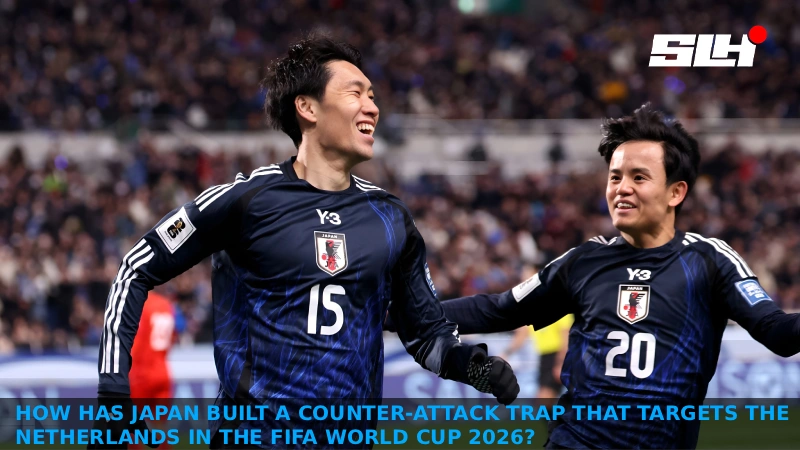


Japan will open their World Cup campaign against the Netherlands on June 14 in Arlington, Texas. Ronald Koeman’s side arrived as Group F favourites, eighth in the FIFA rankings and unbeaten across ten matches since June 2025. But the game has a different shape when you look at how Hajime Moriyasu has built this Japan team. It is not built to compete with the Netherlands on the ball. It is built to make the Netherlands pay for having it.
Japan’s base structure through World Cup qualifying has been the 3-4-2-1. Its most revealing test came in the goalless draw with Saudi Arabia in March 2025, where the shape held firm against a 5-4-1 block and confirmed Moriyasu’s commitment to it. The back three provides defensive stability. Two double pivots shift into a back four out of possession. Two attacking midfielders sit behind a lone striker and are positioned to collapse distances the instant the ball is won.
The system is not built purely to absorb pressure. It is built to absorb and then detonate. Once the ball is recovered in midfield, the distances between Japan’s front players shrink immediately, turning a defensive block into a vertical counter in seconds.
Koeman’s Netherlands build through Frenkie de Jong. In qualifying, he paired with Ryan Gravenberch in a double pivot, dropping deep to receive from the back four and set the tempo for everything that followed. The Netherlands topped UEFA Group G unbeaten across eight qualifiers, winning six, scoring 27 goals, and conceding only four. That record was built on de Jong having time and space to operate.
Japan’s pressing structure is specifically designed to remove that time. If the front three and attacking midfielders cut off de Jong’s first-pass options early, forcing the ball wide or back, the Dutch build-up loses its rhythm before it reaches the dangerous midfield zones. With Xavi Simons already ruled out through injury, there is no obvious second playmaker to absorb pressure if de Jong is forced into hurried decisions.
The historical evidence is strong. At the 2022 World Cup, Japan beat Germany 2-1 and Spain 2-1, both wins following the same template: invite pressure, hold shape, win the ball, break vertically. In September 2023, Japan beat Germany 4-1 in Wolfsburg, with Junya Ito, Ayase Ueda, Takuma Asano, and Ao Tanaka scoring in a result that showed exactly how far this preparation had come.
Those wins didn’t come from coincidence. They came from a team comfortable letting the opponent have the ball, because the structure profits the moment possession changes hands.
Japan’s preparation took a real blow when Kaoru Mitoma was ruled out after tearing his hamstring in Brighton’s 3-0 win over Wolves. He scored the winner in Japan’s 1-0 friendly win over England at Wembley in March 2026. Moriyasu, naming the 26-man squad in Tokyo on May 15, described it as a huge blow.
Mitoma’s direct running in the channels drove Japan’s fastest transitions. Without him, Takefusa Kubo and Daizen Maeda carry that responsibility. The pressing structure doesn’t change, but quick combination play and one-touch releases become more important against a Dutch back line of Virgil van Dijk, Micky van de Ven, and Denzel Dumfries.
The Netherlands’ qualifying record looks dominant on paper, but that campaign was built against European opposition that didn’t press or counter anything as directly as Japan does. Japan’s pattern against bigger nations, Germany twice and Spain once, shows favourites being undone in transition, not in open football.
The Japan counterattack strategy for the FIFA World Cup 2026 is not new information. Koeman knows it is coming. What remains to be seen is whether his side can stay disciplined enough to deny Japan the turnovers the system needs, particularly in the first thirty minutes. If Japan’s pressing triggers rushed de Jong passes in that spell, Moriyasu’s team has the setup and the history to punish it.
Stay updated on every twist and turn of the summer transfer window and catch all the live football action with Sports Live Hub (SLH).
Accessing a high-quality hub sports live stream is essential for fans following the matches of the World Cup season. SLH provides a verified directory of official broadcasting partners, ensuring you never miss a moment of the action from the Premier League or Liga Portugal or World Cup.
Our sport hub live streaming dashboard offers real-time tactical overlays, player fitness stats, and live transfer probability tickers. As the WC 2026 saga develops, SLH is the destination for integrated sports data and high-definition viewing.
If you are wondering how to watch Sports live for free, SLH maintains a curated list of official free-to-air (FTA) broadcasters and legitimate digital promotional windows. We help fans find legal, cost-free ways to enjoy global sports while ensuring safety from unauthorized streaming sites.
What system does Japan use at the 2026 World Cup?
Japan uses a 3-4-2-1 under Hajime Moriyasu, with a back three, double pivots, and two attacking midfielders. It absorbs pressure and launches counter-attacks the moment possession changes.
Why is Kaoru Mitoma not at the 2026 World Cup?
Mitoma tore his hamstring in Brighton’s 3-0 win over Wolves, ruling him out of the 2026 squad. He scored Japan’s winner in the 1-0 friendly over England at Wembley in March 2026.
Who are Japan’s main counter-attack threats without Mitoma?
Takefusa Kubo and Daizen Maeda lead Japan’s counter-attack after Mitoma’s withdrawal. Both must provide the direct pace Mitoma would have delivered.
What is Japan’s record against top European nations at World Cups?
Japan beat Germany 2-1 and Spain 2-1 at the 2022 World Cup via counterattacks. They beat Germany 4-1 in Wolfsburg in September 2023, with Ito, Ueda, Asano, and Tanaka scoring.
 football
 football
 cricket