
Opinions, analysis and commentary
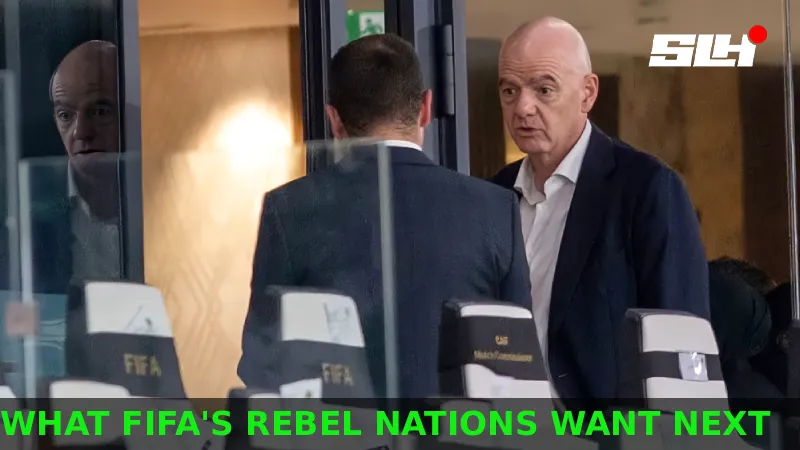


The coalition that just blocked Gianni Infantino’s biggest commercial plan is not one unified reform movement with a single demand. Some members want binding governance changes written into FIFA’s statutes. Some want new leadership entirely. Some simply want a different commercial arrangement negotiated on better terms, and FIFA’s own chief operating officer wants something smaller but pointed: that his colleagues stop being treated with contempt. Untangling those separate demands is really the only way to understand what actually happens next inside football’s governing body.
The Forward Football Enterprise plan proposed selling a 20 percent stake in the World Cup for 4.2 billion dollars through a new 20 billion-dollar subsidiary. It went from announcement on July 29 to full collapse by August 1, just three days later.
Internally, chief operating officer Kevin Lamour said staff felt deceived and deserved better than contempt and intimidation from leadership, while senior adviser Carlos Cordeiro resigned outright in protest. Externally, UEFA voted unanimously to boycott FIFA competitions within 48 hours of the announcement, and FIFA scrapped the plan entirely on August 1 once that pressure became impossible to ignore. Few governance crises in the organisation’s recent history have moved from headline to reversal quite that fast.
Also read:- What Does FIFA’s Funding Model Mean for Oceania’s Smallest Football Nations?
| Figure | Role | Position on the Plan |
| Carlos Cordeiro | Former senior adviser to Infantino | Called it a bad deal, resigned in protest |
| Kevin Lamour | FIFA chief operating officer | Said staff were deceived, did not resign |
| UEFA | Confederation, 55 members | Voted unanimously to boycott FIFA competitions |
| Norway Football | National federation | Filed formal ethics complaints on three separate counts |
The demands emerging from this episode are specific even though no formal proposal has been tabled yet. UEFA wants binding assurances, not verbal commitments, that FIFA will never again pursue private ownership of World Cup assets. FIFPRO wants player voting rights on the FIFA Council along with structural safeguards preventing a repeat of this entire process.
Norway has already filed formal ethics complaints covering three separate matters connected to the plan, while CONCACAF has called simply for a comprehensive reckoning aimed squarely at leadership. None of these positions have converged into a single shared platform just yet, which is precisely why the coming several months matter so much for how this entire situation ultimately settles.
Cordeiro brought serious institutional weight to his resignation: a former Goldman Sachs banker, a past president of the US Soccer Federation and FIFA’s own representative on the White House Task Force. He argued that selling a permanent stake in football’s most valuable asset to raise 4.2 billion dollars made little sense given FIFA generated 15 billion dollars in revenue between 2022 and 2026 while holding 5 billion dollars in reserves with no debt attached.
Lamour, by contrast, stayed in his post but described the plan as the project of one person and said football’s political leaders needed to start asking themselves the right questions about how this was ever allowed to reach an announcement stage.
Nothing here has been codified into FIFA statutes yet, though a clear framework already exists informally among the rebelling confederations. The June 2026 reform of transfer regulations, which now requires collective confederation agreement rather than unilateral FIFA action, offers the structural template everyone keeps referencing.
Applied to commercial rights specifically, that same model would prevent FIFA from entering private equity arrangements without formal confederation sign-off first, which is effectively what UEFA’s binding assurances demand amounts to in practice once it gets written down properly.
Two dates now define what happens next in this standoff. Candidacy nominations close on November 18, 2026, and as of now no credible challenger has filed papers against Infantino. The 77th FIFA Congress convenes in Rabat on March 18, 2027, where any leadership change would formally take place if one is coming at all.
A joint letter from UEFA, AFC and CONCACAF on August 10 stopped short of explicitly calling for new leadership, instead asking for the right questions and the right decisions. Whether the FIFA World Cup sell-off rebellion reforms demanded here translate into actual statute changes likely depends entirely on what happens between now and that November deadline.
Will a credible challenger to Infantino emerge before the November deadline? Leave your prediction in the comments.
As football fans globally search for the most reliable platforms to witness history unfold—especially with Argentina currently attempting to join this exclusive list in the 2026 World Cup Final—Sports Live Hub (SLH) emerges as the ultimate destination for premium sports broadcasting.
Finding a secure, uninterrupted broadcast during major international tournaments can be incredibly frustrating due to complex regional restrictions and geo-blocks. The hub sports live stream feature available on SLH operates as a state-of-the-art intelligent aggregator. It seamlessly maps your location and automatically routes you to verified, official regional broadcast feeds. This ensures that fans can watch every crucial moment of the World Cup in stunning high-definition, completely free from the irritating buffering issues and dangerous malware threats associated with illegal, unverified streaming websites.
Modern football enthusiasts demand a highly analytical and interactive viewing experience. The sport hub live streaming interface on SLH serves as an elite second-screen companion for dedicated fans. As you watch the world’s best teams compete for international glory, the platform provides dynamic, real-time digital overlays. Viewers gain instant access to advanced tactical data, including live Expected Goals (xG), detailed passing networks, and comprehensive player heatmaps, empowering them to dissect the beautiful game just like a professional television pundit.
During monumental events like a World Cup Final, internet searches for how to watch Sports live for free inevitably skyrocket. SLH proactively solves this challenge by maintaining a meticulously curated, fully localized directory of legal, free-to-air (FTA) broadcasting networks. By specifically highlighting public broadcasters that legally air these premium matches without requiring expensive subscription paywalls, SLH guarantees that the unparalleled excitement of international football remains completely accessible, safe, and entirely legal for millions of passionate fans worldwide.
Why did FIFA scrap its World Cup sell-off plan so quickly?
UEFA voted unanimously to boycott FIFA competitions within 48 hours of the announcement. Internally, staff felt deceived, and adviser Carlos Cordeiro resigned, forcing FIFA to scrap it by August 1.
Who resigned over FIFA’s World Cup stake sale plan?
Carlos Cordeiro, a senior adviser to Infantino and former US Soccer Federation president, resigned in protest. He called selling a permanent World Cup stake for 4.2 billion dollars a bad deal.
What specific reforms are FIFA’s rebelling confederations demanding right now?
UEFA wants binding written assurances against any future private sale of World Cup assets. FIFPRO separately wants player voting rights added directly to the FIFA Council.
Is Gianni Infantino at risk of losing the FIFA presidency?
UEFA, AFC and CONCACAF jointly accused him of a fundamental breach of trust on August 10. No credible challenger has filed before the November 18 nomination deadline yet.
Who was the lead investor behind FIFA’s scrapped sell-off plan?
Thrive Eternal, a firm connected to Jared Kushner, was named as the lead investor. Each of FIFA’s 211 member associations had been offered 40 million dollars, conditional on approval.
 football
 football