

Opinions, analysis and commentary
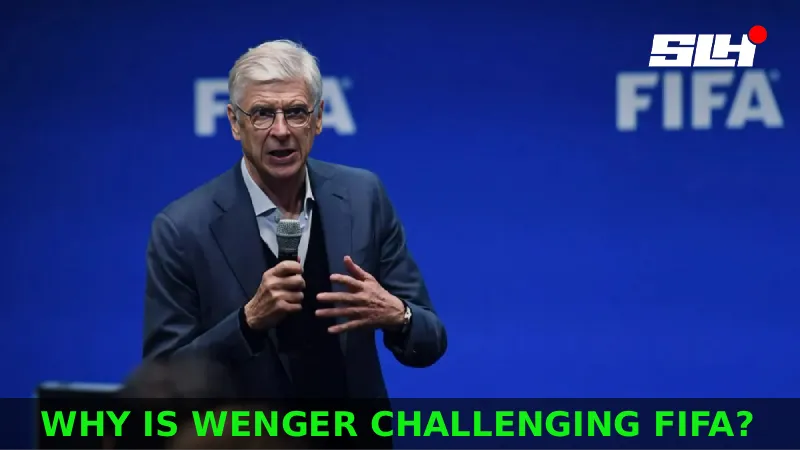


Wenger’s public break with FIFA matters because he is the senior insider who actually runs football’s global development programme, not just another critic on the outside. His August 4 statement confirmed he had no advance knowledge of the stake sale plan and called its withdrawal necessary without hesitation. That distancing puts him alongside two other officials who abandoned the plan, raising a sharper question: if the World Cup’s commercial surplus had gone to investors, would the 60 academies and grants he oversees have been protected first, or exposed first?
Wenger has held the Chief of Global Football Development post since November 2019, effectively replacing Marco van Basten as technical director. At 76, his remit covers data analysis of the professional game, the online training centre used by coaches worldwide, and youth education delivered through 60 academies spread across 60 countries. None of that work touches FIFA’s commercial or financial operations, which is exactly why his intervention carried weight. He was not defending his own budget line, and he had never previously commented publicly on FIFA’s business dealings before this statement. He was speaking as someone with no stake in the deal at all, which made federations take the warning more seriously than they otherwise might have.
The 60 academies Wenger runs, along with the annual Forward distributions paid to member federations, are funded from World Cup commercial surplus rather than a separate development budget. That link is what made the proposed investor stake risky for grassroots programmes. A 20 percent investor claim layered on top of that revenue stream would have competed directly with money currently reaching academies and coaching centres. The table below sets out where each strand of Wenger’s programme gets its money and what risk it faced.
| FIFA Development Program | Current Funding Source | Risk Under the Stake Sale Structure |
| 60 youth academies across 60 countries | World Cup commercial surplus | Investor returns paid first could squeeze academy budgets |
| 6 million dollar annual distribution per member | World Cup commercial revenue cycle | A 20 percent investor claim reduces distributable surplus |
| Online training centre and coach education | FIFA operational budget, less cycle-dependent | Lower direct risk, but independence concerns remain |
| IFAB and tournament technical analysis | FIFA operational budget | Rules-making independence from commercial pressure |
The 2026 tournament generated $15 billion in commercial revenue across its four-year cycle, nearly double the $8 billion produced by the 2022 edition in Qatar. That surplus pays for the Forward programme at roughly $6 million per member federation each year, and it underwrites the academy network Wenger built. Under the now scrapped structure, outside investors would have held a claim on future commercial returns before any of that money reached federations or academies, which is precisely the scenario Wenger’s statement was written to prevent.
Wenger was frequently seen alongside Infantino throughout this past World Cup, which made his decision to distance himself more significant than criticism arriving from outside the organisation. He had faced pressure for staying quiet as the crisis unfolded, and his eventual statement described the withdrawal as necessary because he believes in an independent federation built on transparency and integrity. He was not alone.
FIFA’s chief operating officer had already dismissed the plan as one person’s project, and Carlos Cordeiro resigned from his role, saying he opposed it without reservation. Between the three of them, a picture emerged of an organisation whose own senior staff had been left out of a deal reshaping its biggest revenue stream.
Wenger’s intervention was the first from a sitting senior official who both endorsed killing the plan and confirmed he had been kept out of it entirely. Three senior figures inside FIFA ended up publicly disowning the same proposal within days of each other.
UEFA and CONCACAF are now pushing a reform agenda through a November 18 deadline and on to the March 2027 congress, with development funding at its centre. Whatever emerges from that process, the Arsene Wenger FIFA World Cup development funding question he raised in August will keep shaping how federations judge any future commercial deal FIFA brings to the table.
Should FIFA ringfence World Cup revenue for grassroots programmes before any future commercial deal gets discussed, or is that naive given how the sport’s money actually moves? Let us know your take.
As football fans globally search for the most reliable platforms to witness history unfold—especially with Argentina currently attempting to join this exclusive list in the 2026 World Cup Final—Sports Live Hub (SLH) emerges as the ultimate destination for premium sports broadcasting.
Finding a secure, uninterrupted broadcast during major international tournaments can be incredibly frustrating due to complex regional restrictions and geo-blocks. The hub sports live stream feature available on SLH operates as a state-of-the-art intelligent aggregator. It seamlessly maps your location and automatically routes you to verified, official regional broadcast feeds. This ensures that fans can watch every crucial moment of the World Cup in stunning high-definition, completely free from the irritating buffering issues and dangerous malware threats associated with illegal, unverified streaming websites.
Modern football enthusiasts demand a highly analytical and interactive viewing experience. The sport hub live streaming interface on SLH serves as an elite second-screen companion for dedicated fans. As you watch the world’s best teams compete for international glory, the platform provides dynamic, real-time digital overlays. Viewers gain instant access to advanced tactical data, including live Expected Goals (xG), detailed passing networks, and comprehensive player heatmaps, empowering them to dissect the beautiful game just like a professional television pundit.
During monumental events like a World Cup Final, internet searches for how to watch Sports live for free inevitably skyrocket. SLH proactively solves this challenge by maintaining a meticulously curated, fully localized directory of legal, free-to-air (FTA) broadcasting networks. By specifically highlighting public broadcasters that legally air these premium matches without requiring expensive subscription paywalls, SLH guarantees that the unparalleled excitement of international football remains completely accessible, safe, and entirely legal for millions of passionate fans worldwide.
What is Arsene Wenger’s job at FIFA?
Wenger has served as FIFA’s Chief of Global Football Development since November 2019. He oversees 60 youth academies worldwide, the online coaching centre, technical analysis and IFAB, football’s rules-making body.
Why did Wenger speak out against the stake sale plan?
He called the withdrawal necessary on August 4, insisting he had no advance knowledge of the deal. His statement came after criticism for staying silent while FIFA faced growing federation backlash.
How much revenue did the 2026 World Cup generate?
The 2026 tournament produced $15 billion in commercial revenue across its four year cycle. That figure is nearly double the $8 billion generated by the 2022 edition in Qatar.
Who else resigned over the FIFA investor plan?
Carlos Cordeiro resigned from his FIFA position on July 31, saying he opposed the deal outright. Wales and England also withdrew their support letters by August 3, with UEFA threatening legal action.
What do FIFA’s academies actually fund?
FIFA’s academy network covers coaching, youth education and grassroots partnerships across 60 countries. Programmes like India’s Vision 2047 initiative have drawn direct input from Wenger’s development team since the academy system expanded.
 cricket
 football
 football