
Opinions, analysis and commentary
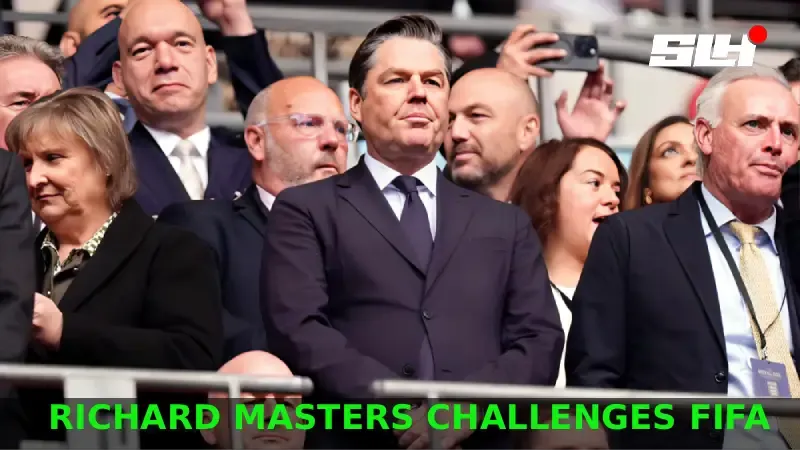


Richard Masters’ comments on 19 August 2026 were reported mostly as a call for a fresh FIFA presidential candidate. That undersold what he actually said. The Premier League chief executive wants any challenger to arrive with a genuine reform platform, one that questions how much unchecked power the presidency itself is allowed to hold. His timing follows a scheme that collapsed under confederation pressure just weeks earlier, and it reframes that collapse as a symptom of a bigger structural problem, one that goes well beyond a single failed proposal.
A day earlier, Masters had accused FIFA president Gianni Infantino of pressing the self-destruct button by pursuing a plan to sell commercial rights in the World Cup to private investors. That scheme collapsed under opposition from UEFA and several confederations. For Masters, the episode wasn’t just a commercial misstep.
It exposed a structural problem: a presidency wielding authority over decisions affecting the entire sport with insufficient institutional checks. Masters rarely wades into FIFA’s internal politics this directly, which is part of why his comments carried extra weight across the game’s boardrooms this week. It also signalled that the Premier League is no longer content to stay silent on FIFA’s internal governance.
Masters called for a challenger capable of unifying all six continental confederations: UEFA, CAF, AFC, CONCACAF, CONMEBOL, and OFC. He stressed that European bodies shouldn’t dictate reform terms globally, insisting any platform has to be genuinely collaborative. UEFA has already been drawing up proposals, including an independent governance review and a plan to rotate the FIFA presidency among confederations to reduce the power attached to the role.
CAF president Patrice Motsepe’s attendance at UEFA’s Salzburg talks was notable given Africa’s historical alignment with Infantino, and it suggested the reform push has support that reaches further than Europe alone. Motsepe’s presence alone won’t guarantee African support for a rotation model, but it opened a door that had looked firmly shut only months earlier.
Masters’ language went further than most coverage captured. He said part of any credible offer should be a look at governance reform, and specifically at the role of the president and how much power that person actually holds, even if that means the next president has to curtail their own job description. That final point is the real demand.
A future president may need to voluntarily give up some of the authority that comes with the office. It is a rare thing for a sitting football executive to suggest that presidential power itself, not just its current occupant, is the underlying issue.
The FIFA president chairs the FIFA Council, drives commercial strategy, and serves as football’s global figurehead, a role critics argue carries insufficient independent oversight. A three-term, 12-year cap introduced after the 2015 corruption crisis was meant to check that power, but the safeguard is now disputed. Human rights organisation FairSquare argued in August 2026 that Infantino has already served three terms, while FIFA maintains his 2016 to 2019 service, completing Sepp Blatter’s interrupted mandate, does not count as a full term.
UEFA’s reform vision reportedly seeks to limit presidential power structurally and rotate the role across confederations, which would mark the biggest change to FIFA’s leadership structure in a decade. Whichever reading holds up, the dispute itself shows how easily a rule meant to limit power can be argued around when the person it applies to disagrees with it.
The 77th FIFA Congress is set for 18 March 2027 in Rabat, Morocco, with 211 member associations each casting one vote. The formal nomination deadline is 18 November 2026, requiring support from at least five member associations. Infantino declared his re-election bid at the Vancouver congress on 30 April 2026, and as of late August, no challenger had formally entered the race.
Names discussed publicly include CONCACAF president Victor Montagliani, AFC president Sheikh Salman bin Ebrahim Al Khalifa, Norway’s Lise Klaveness, and PSG chairman Nasser Al-Khelaifi. Richard Masters’ FIFA presidential election reforms is the phrase now shaping how every one of those potential candidacies will be judged. Every name on that list will now be measured against Masters’ reform test before a single vote is cast next March.
Should any FIFA presidential challenger campaign on cutting the powers of their own future office? Let us know what you think.
While the politics of the boardroom dominate the headlines, the heart of football remains firmly on the pitch. For millions of dedicated supporters who prioritize the beautiful game over administrative disputes, having a dependable, high-quality digital viewing platform is an absolute necessity. Sports Live Hub (SLH) is expertly engineered to bring the world’s most exciting premium football action directly to your fingertips, bypassing the off-field drama.
Navigating through complex regional geo-restrictions and scattered broadcast rights can often ruin the weekend matchday experience. The hub sports live stream ecosystem on SLH actively eliminates these frustrations by aggregating officially verified, high-definition broadcast feeds from around the globe. Whether you are tracking crucial World Cup qualifiers or domestic league showdowns, SLH delivers an ultra-low latency viewing experience. The streamlined platform guarantees that you catch every blistering strike, dramatic penalty, and historic victory the exact second it happens, completely uninterrupted.
For the deeply analytical football fan who demands more than just a standard video feed, the Sport Hub live streaming interface operates as a sophisticated, interactive match center. SLH seamlessly integrates real-time performance analytics, live player tracking heatmaps, and dynamic possession graphics right alongside the main broadcast. This immersive dual-screen integration empowers viewers to analyze tactical formations, passing accuracy, and defensive momentum shifts with the exact same professional precision utilized by elite football pundits and data analysts worldwide.
A massive priority for international digital audiences is discovering how to watch Sports live for free securely and reliably. SLH proactively addresses this massive global demand by maintaining a strictly curated, constantly updated directory of legal Free-to-Air (FTA) networks, official regional channels, and legitimate ad-supported platforms. By exclusively routing users to authorized digital portals, SLH guarantees that premium football content remains highly accessible, budget-friendly, and completely secure from the severe digital risks associated with unauthorized, illegal streaming websites.
Who is calling for a new FIFA presidential candidate?
Premier League chief executive Richard Masters is among those calling for a fresh candidate. He has been joined by UEFA and several European federations that have withdrawn support for Infantino’s re-election.
When is the next FIFA presidential election?
The next election is scheduled for 18 March 2027 at the FIFA Congress in Rabat, Morocco. The formal nomination deadline for any challenger falls on 18 November 2026.
What powers does the FIFA president have?
The president chairs the FIFA Council and shapes the organisation’s commercial strategy. Critics argue the role carries global influence with insufficient independent oversight built into how FIFA operates today.
Is Gianni Infantino running for re-election?
Yes, Infantino announced his candidacy at the Vancouver congress on 30 April 2026. If re-elected in 2027, he would serve until 2031 under FIFA’s current reading of its term limits.
Who could challenge Gianni Infantino for FIFA president?
Names discussed publicly include Victor Montagliani, Sheikh Salman bin Ebrahim Al Khalifa, and Nasser Al-Khelaifi. Norway’s Lise Klaveness has also been mentioned, though none had formally declared by late August 2026.
 cricket
 football