



Opinions, analysis and commentary
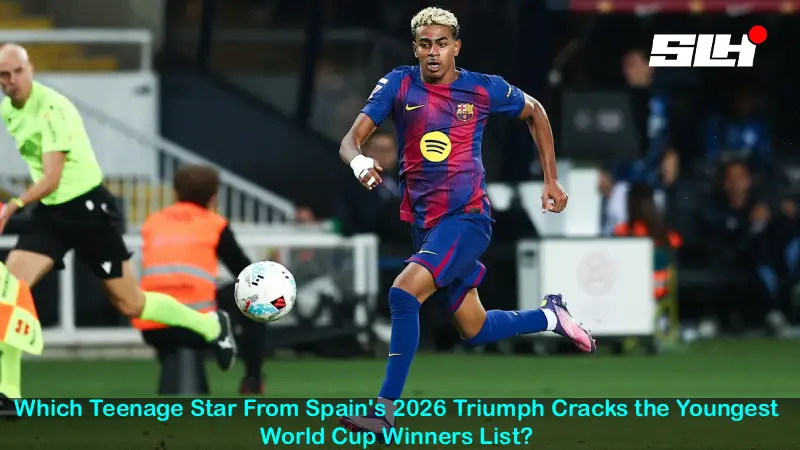


Lamine Yamal was 19 years and 6 days old when Spain lifted the World Cup, and that single number now places him among a handful of teenagers in the tournament’s long history. Spain’s 1-0 win over Argentina at MetLife Stadium on July 19, 2026 delivered the country’s second World Cup title, and two teenagers, Yamal and Pau Cubarsí, both walked away with their names on football’s most exclusive list of youngest-ever winners. Neither had won a trophy of this size before this summer.
Spain entered the tournament as the sixth-youngest squad among all 48 nations, averaging just 26.19 years under coach Luis de la Fuente, who built his side around a new generation with only six players over 30. The result was a team that conceded a single goal across seven matches and scored 14 times, two more than any previous Spain World Cup campaign.
Cubarsí anchored the defense throughout the tournament, while Yamal led the attack with 35 completed dribbles, the most of any player in the competition. Mikel Oyarzabal top-scored for the side with five goals, and Mikel Merino became the first player ever to score multiple game-winning goals as a substitute in World Cup knockout rounds. That kind of squad depth off the bench mattered just as much as the teenage talent starting every match.
Born on July 13, 2007, Yamal was exactly 19 years and 6 days old when Spain lifted the trophy, placing him joint-fourth on the all-time list of youngest World Cup winners. He shares that spot with Brazil’s Coutinho, who was the same age when Brazil won the 1962 title in Chile without Coutinho playing a single minute due to injury.
Yamal started every match Spain played, scored against Saudi Arabia in the group stage, and won the match-deciding penalty in the semifinal against France one day after turning 19.
Born January 22, 2007, Cubarsí was 19 years and 178 days old on the final day, 172 days older than his Barcelona teammate. That gap puts him seventh on the all-time list rather than fourth. He played 750 minutes across the tournament, the joint-most of any outfield player, and won the FIFA Best Young Player award.
With 668 successful passes, Cubarsí ranked second in the Spain squad behind only Rodri. His composed defending at center-back, delivered entirely within a 19-year-old’s body, sat at the heart of Spain’s run to the title. Few teenage defenders in tournament history have carried that level of defensive responsibility through a full campaign without a visible dip in form.
Pelé’s mark of 17 years and 249 days from 1958 remains completely untouched, with Yamal still trailing the Brazilian legend by a full year and 243 days.
| Rank | Player | Country | Age at Final | Year |
| 1 | Pelé | Brazil | 17y 249d | 1958 |
| 2 | Ronaldo Nazário | Brazil | 17y 298d | 1994 |
| 3 | Giuseppe Bergomi | Italy | 18y 174d | 1982 |
| 4 | Lamine Yamal | Spain | 19y 6d | 2026 |
| 7 | Pau Cubarsí | Spain | 19y 178d | 2026 |
| 8 | Kylian Mbappé | France | 19y 207d | 2018 |
Ronaldo Nazário sits second, Bergomi third, and Mbappé now sits eighth, below both Yamal and Cubarsí. Yamal beats Mbappé’s mark by 201 days, and Cubarsí beats it by 29, making this the first final since 1962 to feature two winners ranked above Mbappé on this list.
Yamal turns 23 during the 2030 World Cup, and Cubarsí will also be the same age when that tournament arrives. Spain hosts the 2030 finals, which means this exact generation gets to defend its title on home ground while still in its prime years.
Euro 2028 arrives first, along with a Nations League cycle in between, and a youth blueprint that already delivered Euro 2024 and now the 2026 World Cup gives Spain a real case to become the most decorated side of the coming decade, especially with two of its most important players still years away from their peak. The Lamine Yamal World Cup 2026 youngest winner story is not a peak moment for this Spain squad; it reads more like a starting point.
Does this Spain squad have the depth to stay this dominant through 2030, or will the rest of Europe catch up first? Tell us your prediction.
Who is the youngest player to ever win a FIFA World Cup?
Pelé remains the youngest-ever World Cup winner at 17 years and 249 days old. He lifted the trophy with Brazil at the 1958 tournament in Sweden, a record now nearly seven decades old.
How old is Lamine Yamal?
Lamine Yamal was born on July 13, 2007, making him 19 at the time of the 2026 final. He was exactly 19 years and 6 days old when Spain beat Argentina on July 19, 2026.
Who was the youngest player in Spain’s 2026 World Cup squad?
Lamine Yamal was the youngest player in Spain’s squad at the 2026 World Cup. Pau Cubarsí, born January 22, 2007, was the second-youngest player in the squad.
Is Lamine Yamal younger than Kylian Mbappé was in 2018?
Yes, Yamal was noticeably younger than Mbappé was when France won the 2018 final. Yamal was 19 years and 6 days old in 2026, versus Mbappé’s 19 years and 207 days in 2018.
What was Spain’s average squad age at the 2026 World Cup?
Spain fielded the sixth-youngest squad of all 48 nations at the 2026 World Cup. Their average squad age was 26.19 years, with only six players over the age of 30.
 cricket
 football